
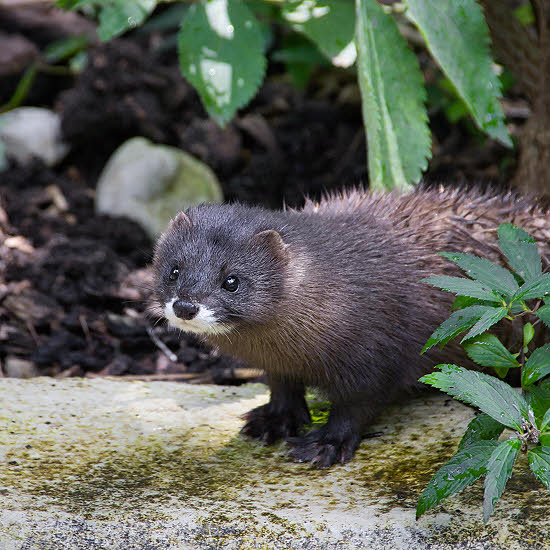
It seemed a good idea at the time. Often said when something done with the best intentions causes serious problems. Animal welfare activists in the 1980’s freed predatory mink (from mink farms) which devastated native water voles, other small mammals and birds.
…. Not what the activists meant to happen. Forethought was required.
The use of insecticides is another example. One aim is to improve crop yield, a good idea. DDT was an early agent developed in the1940’s which proved to have serious side effects on human health. It was eventually banned internationally in 2001. The use of some more modern insecticides require the wearing of protective clothing and face masks due to their toxicity. Recently nicotine-ides have been shown to seriously harm bees and other vital pollinators, an unwanted side effect. Even when applied carefully insecticides spread to wildflower areas attractive to many insects. No wonder butterflies and moths are becoming rarer as they have to contend with loss of habitat as well. A further problem is seepage and rain water run off which washes insecticides into streams and rivers, accumulating in lakes and reservoirs, affecting drinking water. It has also been estimated that crop spraying has resulted in an 80% decline in flying insects; the consequent loss of food for birds as well as direct poisoning has led to more than a 30% reduction in the bird population.
Fortunately there are remedies to reduce the use of insecticides, such as pest resistant crops, the introduction of predators and the use of push-pull (planting insect repelling crops surrounded by insect attracting plants). Good news.
Farmers work long hours to produce food to meet our demands. So a major part of our farmland is now used for animal husbandry. For the benefit of the environment and to provide a greater quantity of food, it is necessary to change to the growing of cereals and other vegetable crops. This shows the vital importance to our food supplies of caring for pollinating insects. See above. We can continue to support our farmers in this by moving to a more vegetable based diet. In other words, reducing our demand for meat.
On 10th September we helped litter picking at Cootham following its accidental scattering. On the 17th we carried out the annual pond tidy at Foxmead Court. On 3rd of October we had a stall at the Storrington on Show at the Leisure Centre. On Saturday 10th we continued our conservation work at Sullington Warren.
The work party on Saturday 7th November at 10am is at Chantry Hill protecting the chalk grassland from damaging scrub. Meet at Greyfriars Stable. Caring for these sites is essential to prevent their loss. More hands make light work, so all helpers welcome. Coffee and cake not to be missed.
A date to note: Our AGM, Talk and Tea is on Saturday 31st October at 2pm in Storrington Village Hall. Our speaker is Paul Stevens, who will be speaking on Birds Without Borders. A Summer with Swifts, Swallows and Martins. Not to be missed.
For information about this and our other activities, or on becoming a member, or offering advice, please get in touch with Chairman Mick Denness on 01903 745971, or see our website. www.storringtonconservation.org.uk/.
Stuart Kersley
Submitted to the Storrington Community Website using the News Item contact form.